
Unexpected New Changes are Welcomed to the Spirits Industry

Unexpected New Changes are Welcomed to the Spirits Industry
Unexpected, new changes are coming to the spirits industry. We’ve refocused on a broader profile of the spirits taster and drinker. As a sensory research company since 2002, we have noticed the public’s extreme and unexpected predilection for alcohol, particularly among neat, straight whiskey drinkers. This inevitably results in a lack of recognition of the very spirits they claim as their “favorites.” Tasting blind (no knowledge of brand) from tulip glasses, few can pick their favorite among three samples.
Unexpected Changes and Consequences
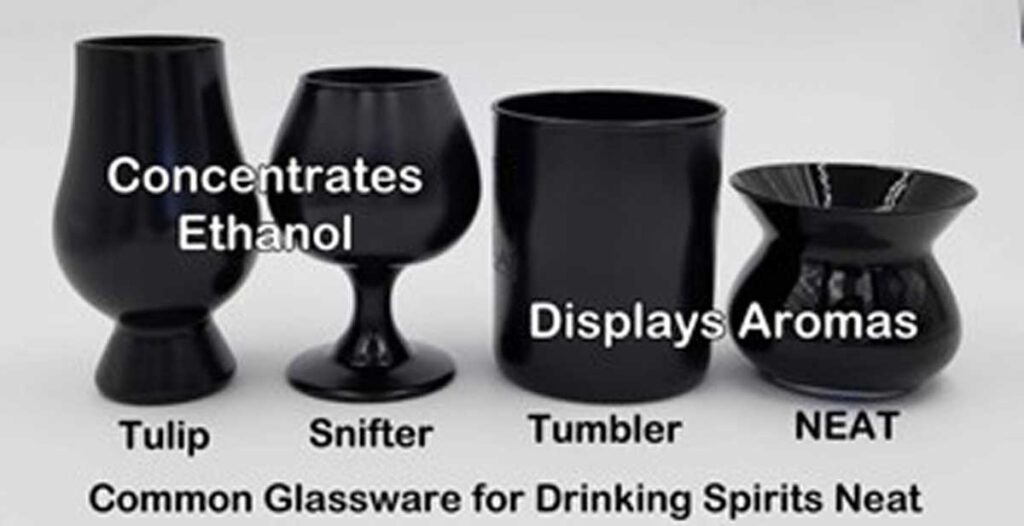
For decades the spirits industry has ignored the effects of pungent, nose-numbing, anesthetic ethanol. Since the NEAT glass came around, more critics are agreeing that it’s time for the popular tulip glass to go. In fact, it seems that the tulip actually contributes to the predilection of alcohol among straight, neat, spirits tasters. Why? Because it shoves the ethanol first, right up into the nostrils, causing pungency and trigeminal nerve irritation.
The consumer has come to expect that the strong ethanol is a flavor characteristic of the spirit. As a result, many spirits tasters erroneously measure a spirits’ quality by the strength of the ethanol vapor.

The Dumbness of Ethanol: Once ethanol hits the nose, the vast majority couldn’t care less about the sensory subtleties of the spirit. Over time, they become “label-buyer-status-seekers,” pleased and satisfied by the intake of highly concentrated, pungent, anesthetic, nose-numbing ethanol of the spirit, making choices by rarity, influencers, or memorable advertising. An unexpected outcome.
We asked ChatGPT “Where can this obsession with ethanol lead in 3-5 years?”
ChatGPT (unedited): The current trend in spirits tasting emphasizes high ethanol content, often facilitated by tulip-shaped glasses that concentrate aromas. This preference can overshadow the appreciation of a spirit’s nuanced aromas and flavors, focusing on the intensity of alcohol over its complex character.
Unexpected New Changes and Directions
“The industry is on the cusp of significant change. Shifting preferences toward balance, innovations in glassware, and educational efforts are poised to guide consumers toward a more nuanced understanding of spirits.” (end of ChatGPT response).
Isn’t it about time the industry actually worked hard to get brand loyalty instead of creating stories and packaging which entice consumers to buy rather than gravitate to their own personal preferences? Imagine the market diversity and offerings if spirits distributors and distillers concentrated on flavors, rather than depending on ethanol to muddle the senses. Also, muddled senses allow marketers to replace the personal preferences with emotional and status appeal. How long will consumers put up with it?
Indications are it may be sooner than we think, and the first step is to stop using a wine glass designed for 22%ABV to taste 40% ABV spirits.
Do pungent ethanol aromas belong to the spirit of sensory diagnostics? We say NO, not if you want to smell anything else but ethanol. In the first place, you can’t detect subtle aromas with a nose numbed by tulip-shaped ethanol nose cannons. Secondly, if you change glassware from a tulip concentrator to an ethanol dissipator, then the ethanol disappears. Unexpected flavors emerge.
Conclusion
It is coming, but not without the realization and efforts of the drinking public. Consumers must realize that they are buying the ethanol and the marketers emotional appeals instead of satisfying their personal preferences. It may be a grass roots movement, but it appears that grass roots approach may be gathering some momentum. Choose a better glass.


