
The Truth About Sea Salt Aromas in Whisky

The Truth About Sea Salt Aromas in Whisky
Sea salt aromas have never and will never appear in Scotch whisky distilled in the islands, or anywhere else, for that matter. Sea salt is sodium chloride, and it has no smell. Serious whisky drinkers read constantly to discover new information on spirits. Scientists keep quiet while acclaimed scotch whisky critics, authors, evaluators, and mavens swear by the salty smell of scotches distilled near the seacoasts of Islay, Jura, Skye, and Arran. Moreover, they credit salty sea air for salty aromas. Marketing again executes falsehoods as science fails to push back to debunk misleading information.
The Truth: Sea Salt (Sodium Chloride) has no Smell

Salt has no smell. Placing saltwater on the tongue reveals salt as a taste, not a smell. Some scotch whiskies are produced in an atmosphere that periodically contains salt spray, but how can salt get in the barrel? If salt could get in, scotch could get out, leaking or quickly evaporating (some evaporates – “angel’s share”). The salt stays outside the barrel. Interestingly, scotch reviewers never discuss how salt gets in the whisky.
One highly improbable explanation could be that during distillation; the spirit was made or cut with salty water or was the barrel washed with saline water? Was salt added to the barrel? Indeed, a good distiller never does that, much less, would ever admit to it.
Salt is Not in the Barley
Some Islay-grown barley is a component of some Islay scotch. However, if salt deposits on the barley, does it survive processing and cleaning? Does the distillation (high-temperature evaporation) process leave enough salt to be detectable on the tongue? Highly unlikely. Modern barley processing through soaking, screening, shuttles, and milling minimizes any possible trace of salt, only 20% of husks (popular milling mix), eliminate 80% of the potential problem. Therefore, even the slight possibility of detectable husk salt is nil.
Sea spray (spume) is a natural product of violent waves and wind. Called SSA (sea salt aerosol), tiny sea spray bubbles burst at the interface of water and air, rising up from crashing waves, commonly leaving light salt deposits on the pier, docks, and buildings close to wave action and weather.
During fierce storm conditions in the cool fall and winter, sea spray travels as much as 25km within the atmospheric boundary layer. However, jet droplets and spumes from normal wave action throughout the year travel only about 20cm above the water surface and may travel a horizontal distance of 100 feet.
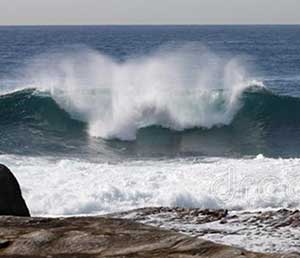
What is Sea Spray? Sea spray consists of 60-90% DOC (dissolved organic carbon), and an additional percentage of dead algal cells, the product of algae blooms. Do any critics ever discuss the latent aromas of rotting fish and dead algae? Not that we know of. Subsequent rain in the aftermath of most storms washes salts and DOCs to the ground, and salt crystallizes. Inside storage facilities, atmosphere salt levels are extremely lower than those just outside the structure, and non-existent in the barrel.
Salt Will Not Permeate the Barrel
Barrels are tight, and air can slowly permeate the wood, but the probability of salt migrating through the wood membranes or tightly swollen stave seams is unlikely, if not impossible. In the likelihood that salt crystals reach the barrel, they will leave a tiny white line at every leaky seam. Certainly, microbial bacteria have a better chance to permeate a seam than does crystallized salt.
The test: We prepare a saline solution of .05% NaCl (table salt) and verify that with a calibrated salinometer. Washing the salinometer after each test, we test several Islay scotches which reviewers note as “sea salty” for an indication of salinity. They all test at 0.00% salinity. If salt isn’t in the liquid, how could it be in the aroma? Among four reputable tasters, none can distinguish (blind) taste or smell differences between .05% and 0.00% NaCl water.
The Obligatory Sea Salt Taster’s acknowledgment
Reviewers believe a reference to salty aromas is obligatory in their notes on island/Islay scotches due to proximity to the sea. They know in advance which scotch they are tasting, and fear omission of ocean flavors is an unforgivable oversight, because “It ought to be there.”
There are Worse Aromas than Non-Aromatic Sea Salt
If there are nearby sewage treatment plants or fertilizer factories, they surely ignore that description. If there are rose gardens or pine forests nearby, they certainly take advantage of the opportunity to describe enticing floral and woodsy notes. Brand marketers support the myth to enhance diversification from other scotches because they can, and it sells whisky. Salt exists in scotch whisky because reviewers attempt to make their notes interesting and appealing.
Personal Ambitions
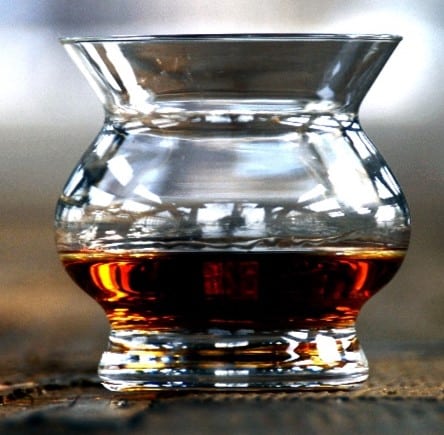
Perhaps the critics believe followers will applaud their exceptional sensory prowess in salt detection when no one else can. Indeed, it is a nearly unchallengeable opportunity to enhance the taster’s mystique and prowess. Especially if other reviewers do not note salt in the same spirit; it’s flagrant one-upsmanship, “My nose is better than yours.”
Summary
As a personal experiment, taste scotch double-blind (no peeky label/bottle, someone else determines the order). Construct flights with some “sea salty” (according to a reviewer’s designation) samples. Salty air comments appear because tasters know the brand/label/bottle shape/distillery location indicates a particular spirit is made near the ocean. Indeed, tasters also gather clues from surreptitious hints of high phenol peat smells, which may indicate the spirit is made near the ocean (Islay scotches for example). Finally, unless “sea salty” shows up in professional sensory evaluations, it is not a proven attribute of spirits made/aged near the sea. Back to Home. Sensory Science and Tasting Glasses
Bio: George F Manska, CR&D, Arsilica, Inc.
Qualifications: Published sensory science researcher, and entrepreneur. BSME, NEAT glass co-inventor
Mission: Replace myth and misinformation with scientific truth through consumer education.
Comments Welcome – Contact: george@arsilica.com | 702.332.7305
More Information: www.theneatglass.com/shop
About The Author
Discovered and developed Naturally Engineered Aroma Technology (NEAT) to enhance the presentation and perception of spirits by separating the disagreeable, numbing aromas of ethanol alcohol from characteristic spirit essences. NEAT connects human physiology, chemistry, and basic physics to improve glassware design to appeal to the flavor senses of smell and taste.
Glassware today is designed in the styling studio, and marketing is added later to sell the design and insinuate function. Inventor of the NEAT glass. Our mission is to educate the public and industry professional to improve knowledge on nosing and tasting spirits. Scientifically designed glassware exposes all traits of a spirit, good and bad, and raises the bar of excellence by exposing the true quality previously hidden by nose numbing ethanol. We are: Changing the Way the World Drinks. NEAT is the Shape of Flavor, and Form Follows Function.


